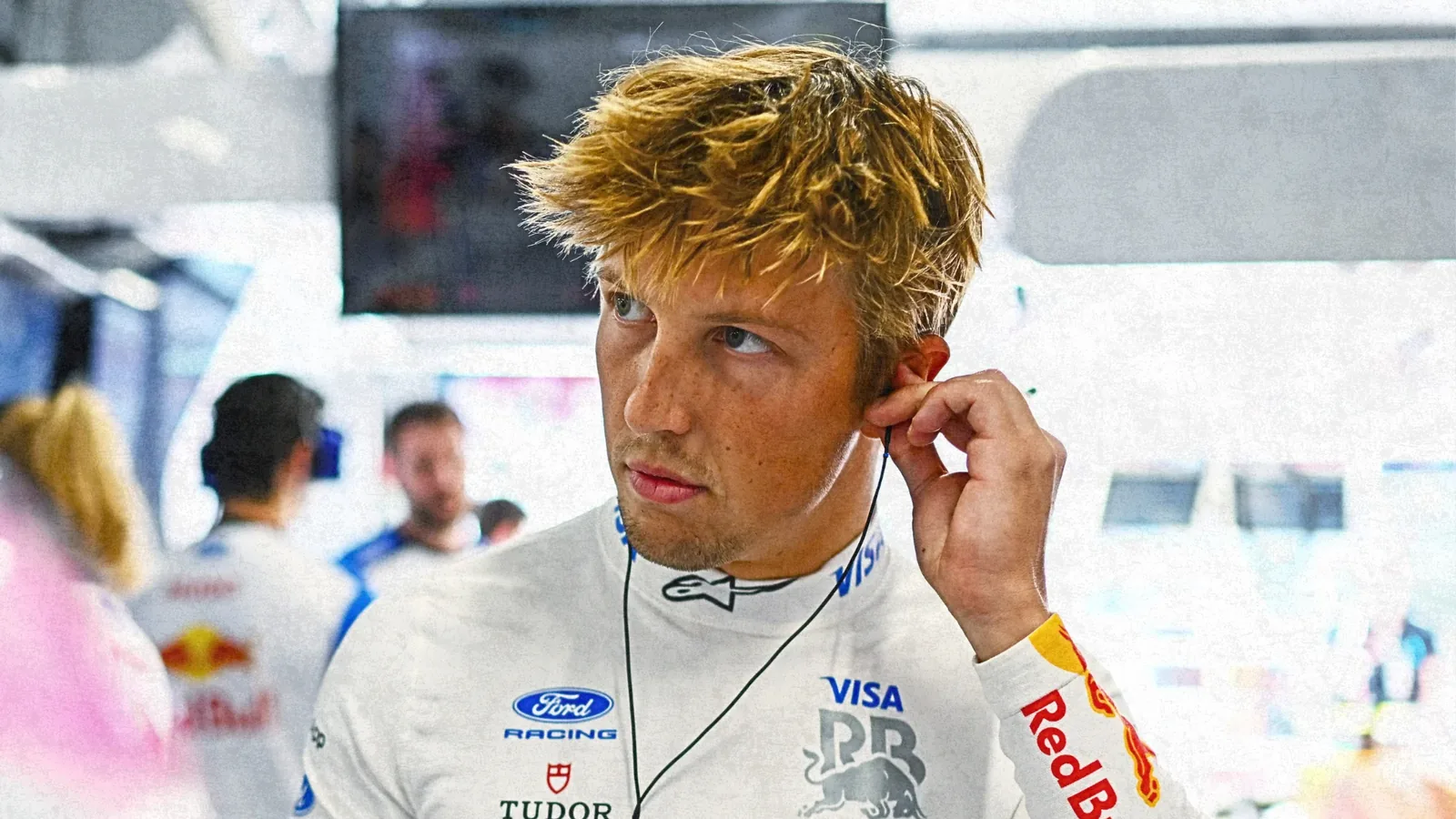
Liam Lawson has delivered a strong performance in the first half of the 2026 season with Racing Bulls, positioning himself as a standout driver. The team has shown consistent high-level performance, moving to the forefront of the midfield and approaching the top four teams.
Lawson’s current standing places him as ‘best of the rest’ in the driver standings, behind those from the top four teams. This is considered appropriate given that Racing Bulls has the fifth quickest car on average this season and Lawson is the more experienced of their two drivers.
Lawson’s Future and Team Dynamics
Despite his strong season, Lawson’s career progression in Formula 1 faces challenges, partly due to recent history and his current teammate, Arvid Lindblad. Lindblad, a rookie this year, is performing comparably to Lawson. According to team principal Alan Permane, the team has “two quick guys” whose performances are “incredibly close.”
While Lindblad trails Lawson by 20 points in the championship, there is minimal difference in their pure pace. Lawson leads the qualifying head-to-head 6-5 in races where a fair comparison can be made. However, Lindblad is slightly ahead in average speed by 0.017 seconds, which is notable for a rookie.
In 2025, Isack Hadjar was considered more impressive than Lawson, leading to Red Bull’s decision to promote Hadjar over Yuki Tsunoda for the current season. Lawson’s reputation was also affected by two challenging races alongside Max Verstappen at the beginning of 2025, which resulted in his demotion back to Racing Bulls and a swap with Tsunoda. After this, Hadjar comfortably outperformed Lawson.
Permane has stated that the goal for him and his team is to “develop drivers” for Red Bull. The approach of Red Bull’s new leadership, including team principal Laurent Mekies and the soon-to-be head of the young driver programme Gwen Lagrue, regarding Lawson’s future remains to be seen.
Sprint Race Decisions and Spectator Value
The decision on where to host Formula 1 sprint races is primarily made by Formula 1 as the commercial rights holder. The FIA, the sport’s governing body, formally approves the calendar, but this is largely a procedural step.
Formula 1 aims for sprints to occur on tracks that are likely to provide exciting qualifying sessions and races. Additionally, there is an effort to distribute them evenly throughout the calendar to avoid clustering. Commercial considerations also play a role, as tracks pay an additional fee to host a sprint. However, Formula 1 has indicated it would not accept the fee if the location was deemed unsuitable for a sprint event.
Tracks themselves also decide whether they wish to host a sprint, often motivated by the potential to attract more spectators or offer better value for money. Silverstone managing director Stuart Pringle was keen to host a sprint this year to “deliver as much value as possible for the ticket price.” A sprint event provides spectators with two races and two qualifying sessions over one weekend.
Pringle noted that the additional cost for the race fee was considered worthwhile for the increased action. The British Grand Prix saw a total of 500,000 spectators over four days in 2025, increasing to 564,000 in 2026. Pringle attributed the increase of 64,000 spectators, primarily on Friday and Saturday, to the sprint format.
Drivers Challenging in Inferior Cars
Challenging for a world title in an inferior car is a rare feat, typically achieved only by the sport’s top drivers. While Ayrton Senna, Michael Schumacher, Fernando Alonso, and Max Verstappen are often mentioned in this context, other notable drivers include Lewis Hamilton and Alain Prost.
Prost’s 1986 season is highlighted as exceptional, where he secured his second world title in a McLaren that was considered inferior to the Williams driven by Nigel Mansell and Nelson Piquet. There is also a strong argument that Hamilton did not always have the best car during his title challenges, particularly in 2008 with McLaren, or in 2007 alongside Alonso, given subsequent insights into the relative performance of Ferrari drivers Felipe Massa and Kimi Raikkonen.
Alonso’s 2012 season is frequently cited as a remarkable achievement, where he competed for the title until the final race in what was statistically the fourth quickest car. This performance is considered extraordinary, especially considering incidents in the Belgian and Japanese Grands Prix where Alonso was involved in collisions with Lotus drivers Romain Grosjean and Kimi Raikkonen, respectively, through no fault of his own.
The Formula 1 cars are scheduled to return to the track for the Dutch Grand Prix at Zandvoort from 21-23 August.
Source: bbc.com